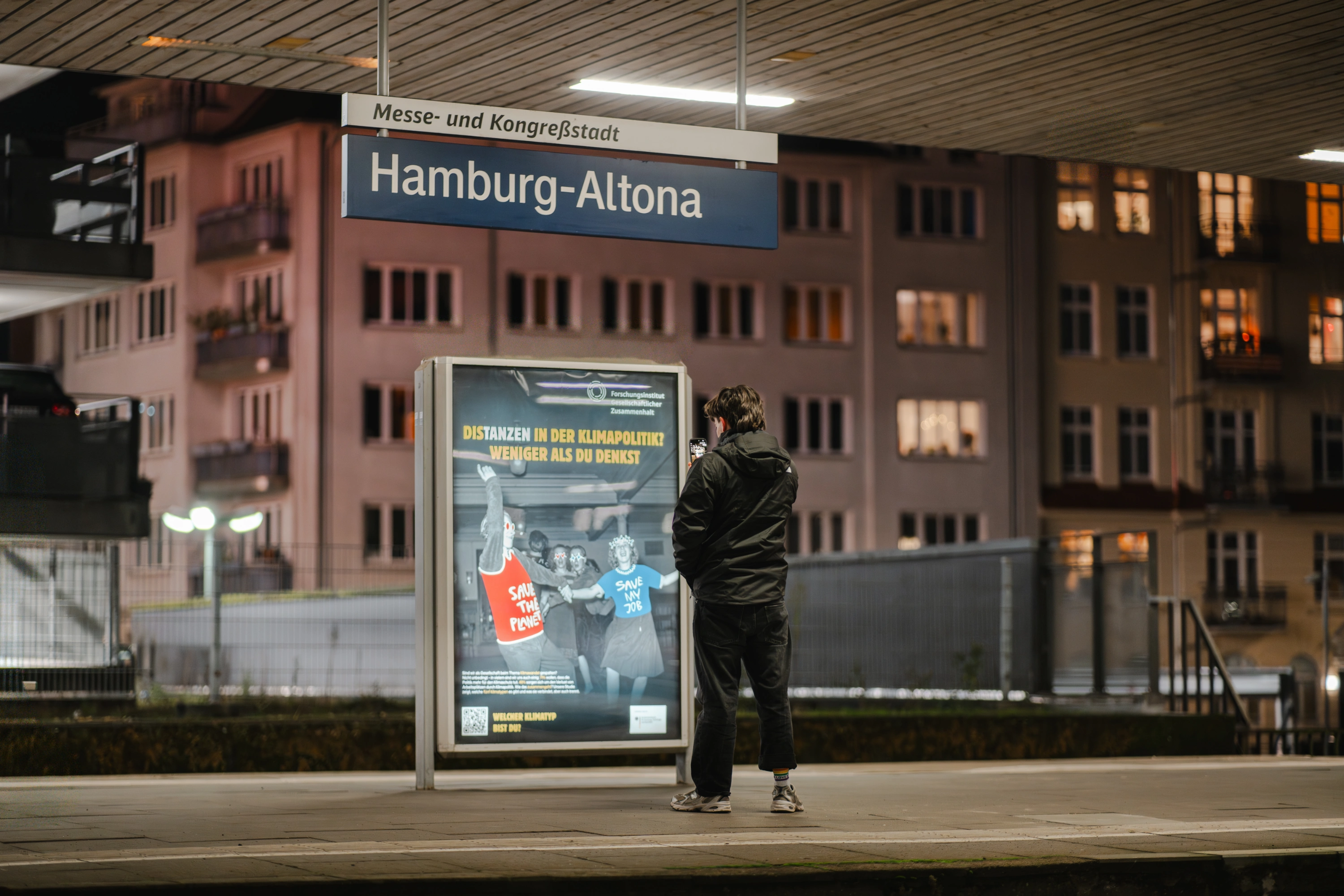
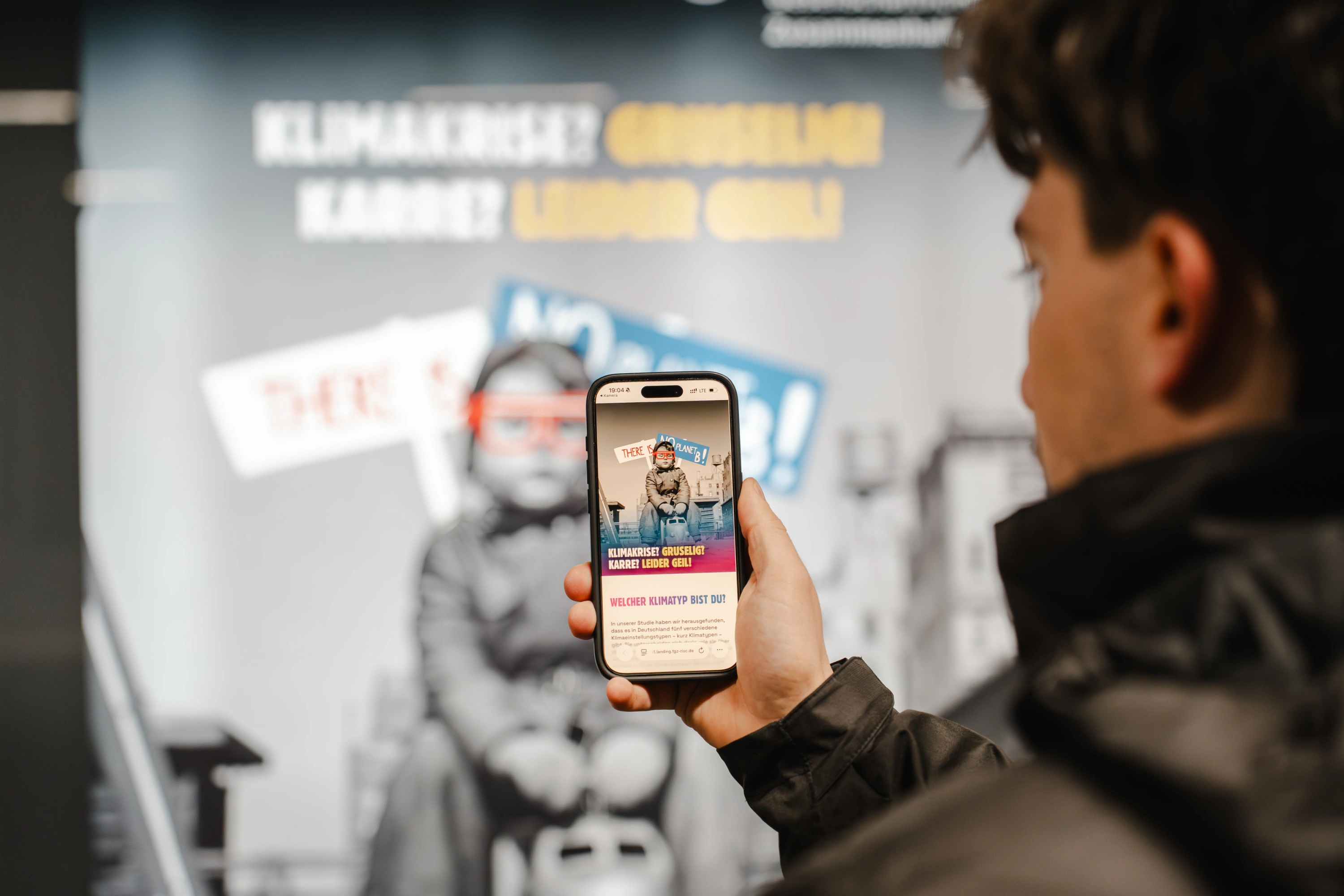
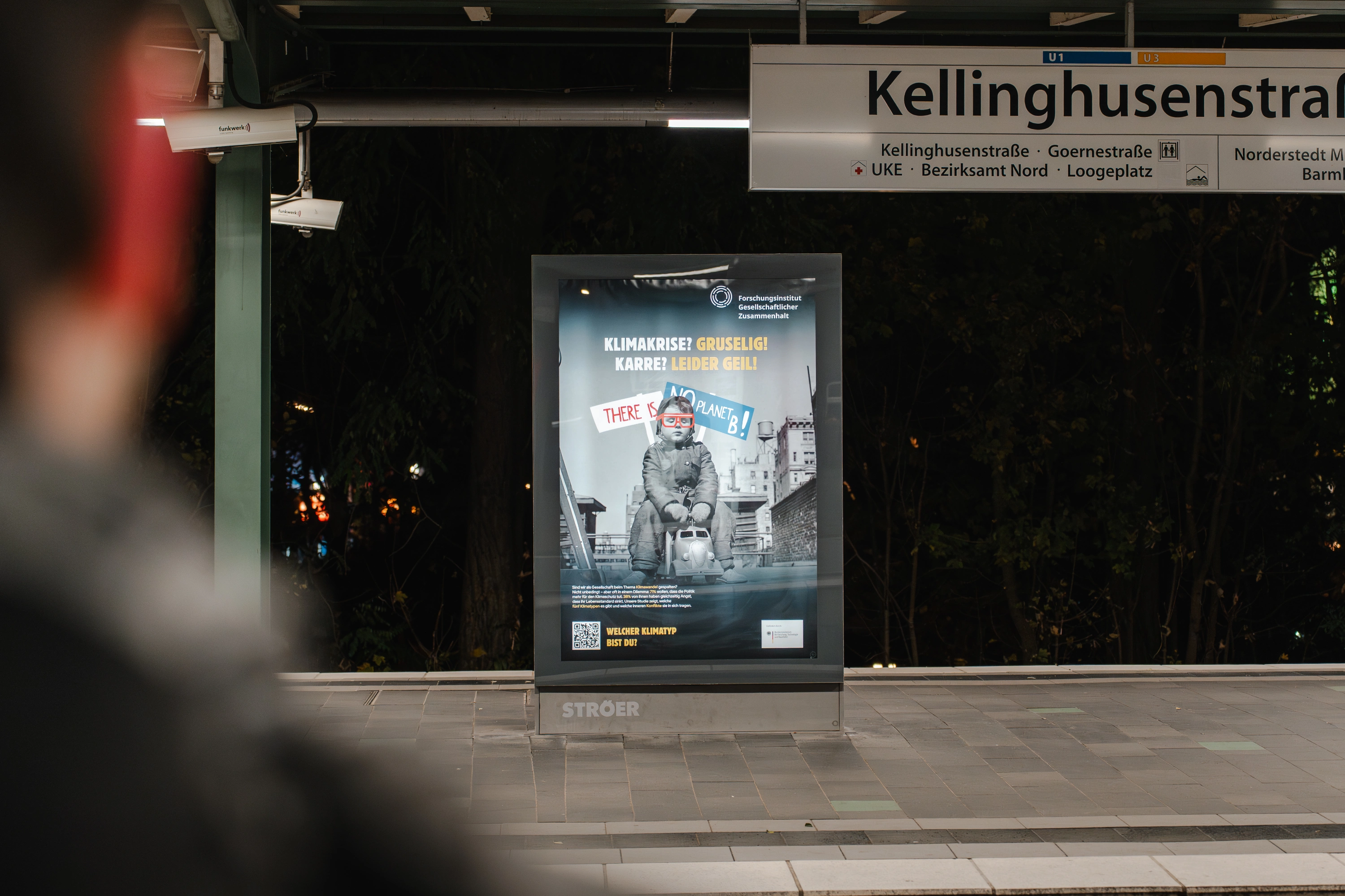
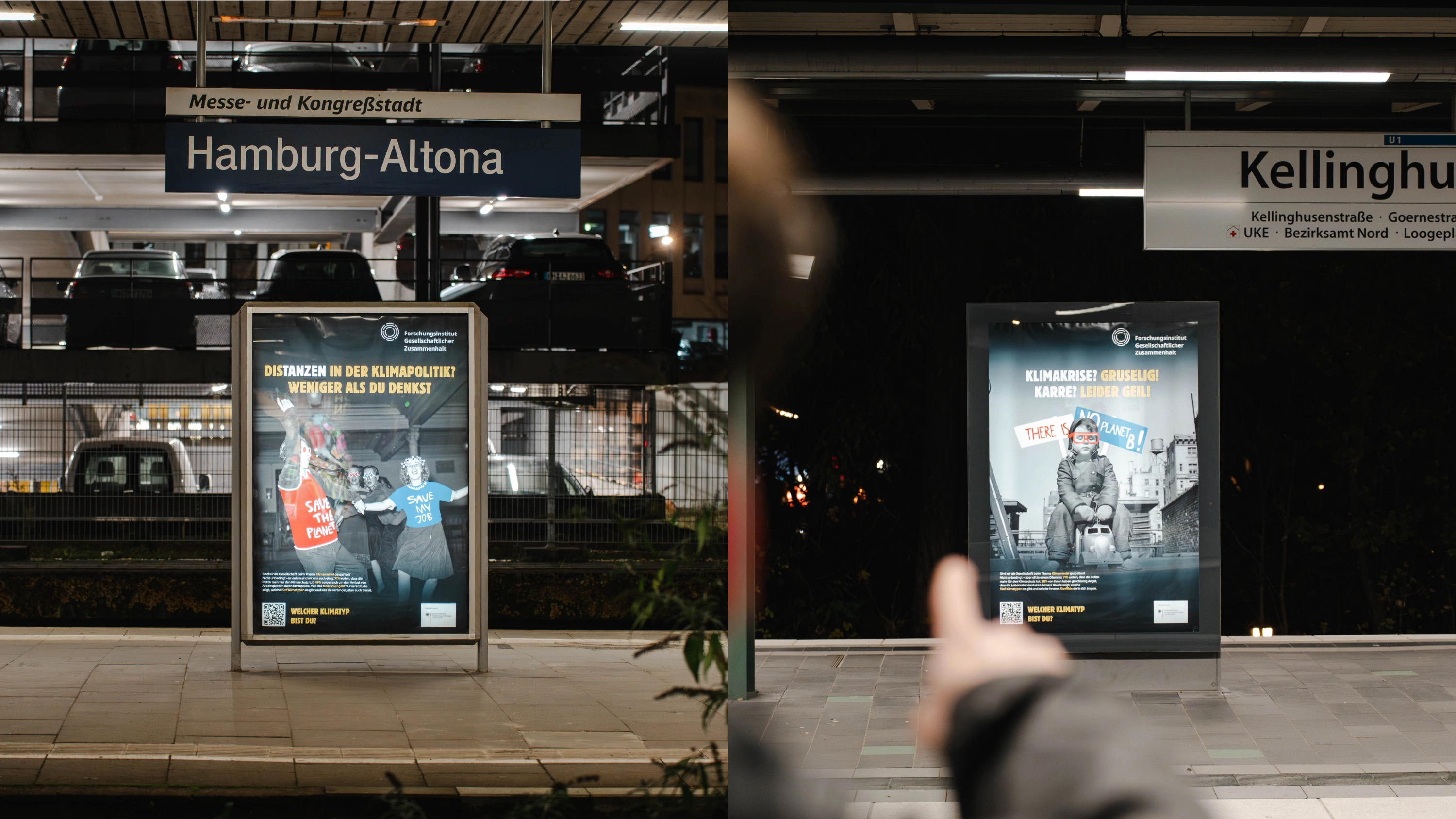
For the Research Institute for Social Cohesion (FGZ), we designed a nationwide poster campaign accompanied by a microsite. The focus: different climate types and their role in the ecological transformation. On the occasion of the publication of the FGZ’s second Social Cohesion Report, we brought the topic of the climate crisis and social cohesion — with striking visual subjects — to the places where people encounter each other: pedestrian zones, bus stops, and train stations. A complementary postcard initiative brings the topic into pubs and bars as well. And not without reason: under the motto “Which climate type are you?”, the posters invite people to reflect on their own attitudes and those of others.
Second Social Cohesion Report CLIMATE TYPES
Nationwide campaign for the second Social Cohesion Report
Motifs sharpen contrasts and stimulate debate
The internal and external conflicts surrounding climate protection and ecological transformation have been distilled into small scenes in which anyone can recognize themselves in one way or another. The whole concept is topped off with striking slogans such as “Still smoking or already gluing?” or “Private jets for everyone!”
Invitation to interact microsite & climate-type calculator
The pointed representation of climate types on the posters encourages people to question their own position and actions. A QR code leads to the accompanying microsite, which—alongside further information on the Social Cohesion Report—enables an ad-hoc categorization. Anyone who wants to know more precisely which climate type their attitudes toward the climate crisis align with can use the climate-type calculator. The calculator assigns users to one of the five climate types identified by FGZ researchers, based on a total of twelve questions.
Five climate types
When it comes to climate issues, deep divides can emerge. Based on data from the German Social Cohesion Panel (SCP), FGZ researchers distinguish five climate-attitude types: About 8% fall into the Rejecting group — people who view climate protection skeptically and primarily fear financial burdens. Around 25% belong to the Indifferent, for whom climate change holds little personal significance and who express neither strong concerns nor clear opinions. The largest group, the Agreeing (31%), supports more climate protection and expresses only moderate economic concerns. The Concerned (18%) perceive climate change as highly threatening, want decisive measures, but simultaneously worry significantly about losses in prosperity. Another 18% form the Determined — people who support ambitious climate policies and approach the transformation with relative calm.
These types reveal how differently people perceive climate change and climate policy. It also becomes clear that the climate crisis has the potential to divide society — but at the same time requires everyone to act together for a successful socio-ecological transformation.